
After the Fire, Before a Lease
For renters displaced by Los Angeles's January 2025 fires, finding somewhere to stay left another question: how long could they afford to remain?
Updated October 6, 2026
The sources were first published between January and August 2025. The two USHS pages show later updates dated October 21, 2025; their current wording has not been checked against a summer 2025 archived version. Chevondolyn's experience comes from USHS's published account, not an interview conducted for The Margins. My housing-search observations come from work with refugee families in Long Beach.
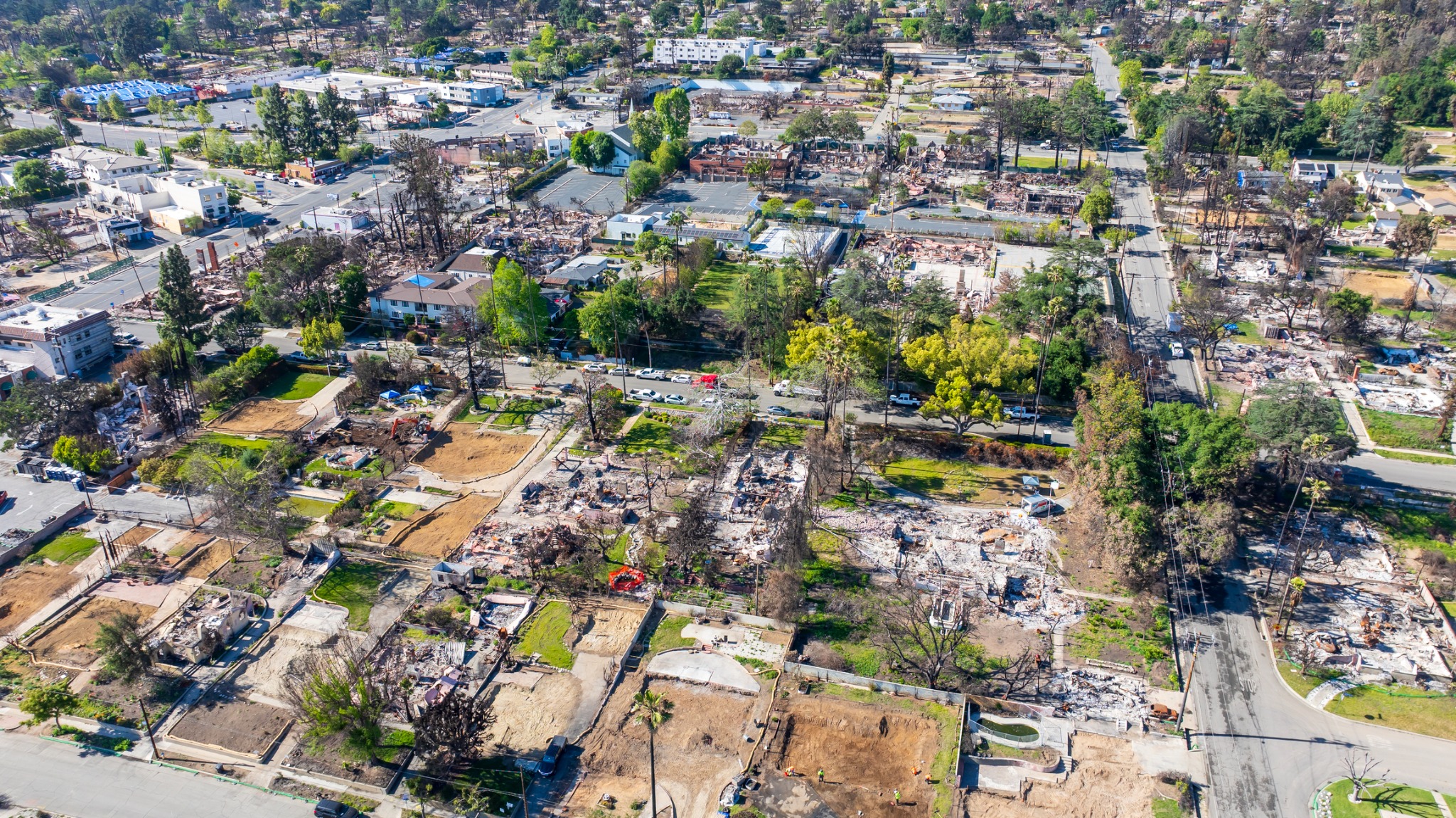
Marcus Jones / iStock
Before the Eaton Fire, Chevondolyn had already left one home because she could no longer afford it. The mother of two gave up her apartment in Santa Clarita and moved in with family. Then the January fire struck the community she had recently returned to. In an account published by Union Station Homeless Services in August 2025, the organization described how she lost what she had after a period of financial difficulty. [1]
Some evacuees had already been struggling to keep their housing before the fires.
USC researchers surveyed 1,360 Los Angeles County residents between February 1 and March 30, 2025. Among evacuees who had faced housing insecurity before the fires, 22 percent had not returned home when surveyed, compared with 15 percent of those whose housing had been secure. These were circumstances during the survey period, rather than final outcomes. [2]
A family may need enough bedrooms, a manageable journey to work or a location from which children can keep attending school. Moving farther away can change who is available to help with childcare. Staying with relatives can provide immediate shelter while leaving the longer-term arrangement unsettled.
While helping refugee families search for housing in Long Beach, I tracked bedrooms, income limits, deposits and credit requirements. I called apartments to check the terms. A listing could look promising until the requirements were considered together.
That experience makes me cautious about treating a list of available properties as a list of homes people can actually enter. A family may be able to cover monthly rent but need help with the deposit. An apartment may fit the budget but fail to accommodate the household.
California's housing department undertook a version of that matching effort after the fires. In July, it reported that 141 properties responding to its survey of state-funded housing in Los Angeles County had identified 723 vacant units available in June. The department shared the list with the county to help connect displaced residents to possible housing. Residents still had to meet the relevant eligibility requirements. [3]

Eric Thayer / Los Angeles Times
The vacancy count did not show how many households qualified, applied or moved in.
Emergency accommodation gave some survivors time to begin that search. Airbnb.org worked with 211 LA to arrange free stays after the fires. In a January 29 update, Airbnb reported that more than 17,000 people had booked temporary accommodation through the response. The announcement also described funding for additional nights and extensions for people who had lost their homes. [4]
Moving from a free emergency stay to a lease required money for rent and a deposit.
By July, that next stage remained difficult. LAist reporters, in an account republished by KQED, wrote that 211 LA was working with more than 3,000 fire-affected households, most of them renters. Its executive director, Maribel Marin, described clients encountering much higher rents for comparable housing. The report also cited the organization's data showing more than 100 families living in vehicles. These figures described people within its service network; they were not a count of every displaced household in the county. [5]
Union Station Homeless Services described an Eaton Fire program covering security deposits, overdue rent, essential furnishings and motel vouchers, with rental assistance available for households needing support beyond one month. It said the program was designed to reduce barriers for people who did not qualify for traditional aid. [6]

Image source: Union Station Homeless Services
Door of Hope combined housing support with help navigating other resources. In March, Pasadena Community Foundation reported that the organization was assisting families with moving in, FEMA and insurance applications, and financial gaps left by other sources of assistance. Funding also supported a disaster case manager who could connect families with healthcare, therapy and job-search help. [7]
For renters, rebuilding also leaves an unanswered question about return. A replacement building has an address, but its construction does not by itself establish when a former tenant can move back or what that tenant will pay. Until those details are known, families have to make decisions about their lives elsewhere.
For Chevondolyn and other displaced renters, the question continues beyond a temporary booking or an approved payment: once the assistance runs out, can they still afford to stay?
Sources
- Union Station Homeless Services, “Eaton Fire: A Story of Resilience”, August 15, 2025.
- Ileana Wachtel, USC Dornsife, “Wildfires hit L.A.'s housing-insecure residents hardest, USC Dornsife survey finds”, April 10, 2025.
- California Department of Housing and Community Development, “Six Months After Devastating Los Angeles Area Fires, State Housing Leaders Reflect on Ongoing Role in Administration's Recovery and Rebuilding Efforts”, July 7, 2025.
- Airbnb Newsroom, “Airbnb.org has housed 17,000+ people displaced by Los Angeles fires”, January 29, 2025.
- Libby Rainey and Erin Stone, LAist / KQED, “6 Months After January's Fires, Recovery Is Just Beginning for Many”, July 8, 2025.
- Union Station Homeless Services, “USHS Introduces: The Eaton Fire Housing Assistance Program”, June 10, 2025.
- Pasadena Community Foundation, “Door of Hope Expands Housing Program with PCF Eaton Fire Funding”, March 11, 2025.